Kumete Forest
Restoring Nature,
Nurturing Futures
where nature and young minds grow together.
Connect with us
The Open Day on Thursday 23 June at Kumete Forest was a great success despite the wintry weather.
The feedback from the many who attended was positive and we look forward to plenty of group visits from schools, education organisations and church youth groups over the coming months.
Of special note were:
- the growth of the forest in a short 15 years since planting,
- the wonderful play and picnic areas,
the informative signage - the revamped cowshed as an ideal place for meeting and teaching.
Please visit Kumeteforest.nz to book the forest and facilities for your school or group, and/or to find out more.
Kumete Forest is super handily placed at only 5-10minutes from central Whanganui
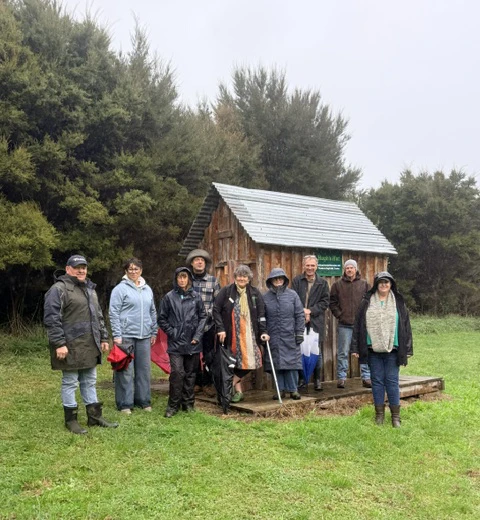
A few of the keen Open Day visitors at Hugh’s Hut picnic area in Kumete Forest
About Kumete
Forest
Kumete Forest is a unique ecological and educational initiative in Whanganui, established by the Dunbar Trust. Nestled in a restored farm gully, this native forest is a long-term project designed to provide a lasting legacy for future generations. With careful planting and conservation efforts, Kumete Forest is becoming a thriving natural habitat, offering young people a rare opportunity to experience and connect with Aotearoa’s indigenous flora and fauna.
This website serves as an information hub for educators, community groups, and individuals interested in the project. It highlights the forest’s origins, current progress, and future goals while inviting stakeholders to share ideas and get involved. Whether through school visits, conservation projects, or outdoor education programs, Kumete Forest offers an inspiring setting to cultivate knowledge, curiosity, and a deep respect for the environment.
Join us in shaping the future of Kumete Forest—where nature and young minds grow together
Happening Now
Excited! – 15 new plant signs
have recently been erected to help with native plant identification. And a cool addition is the info on Uses and notably medicinal uses on each sign. Rub the leaves of the Ngaio on your skin to ward off the sandflies – a handy insect repellent.Kumete Forest Trees ...
All Updates
We Need Your Input
We encourage all providers and organisations involved in supporting our young people to reach out to us and provide input on how we can develop Kumete Forest to better support your needs.
Peter Russell
Peter has an Ecology Management business. Since the forest was planted Peter has been overseeing the quality of the forest. With weed control, track maintenance and replanting where necessary. Along with Peters critical involvement, Horizons have been trapping pests – rats, possums etc.
Focus Group
We are soon to approach Intermediate schools and Church youth groups to meet at the Forest and ask for feedback about how Kumete Forest may best benefit youth. We want to better understand the most valuable uses the Forest can provide to youth. We also would like to know what else we can do to enhance the experience of young people.
Flora facts
We are lucky to have several Kahikatea trees, that were part of the Kumete stream area prior to our planting. These trees are much loved by birds and insects, and of course by us.
The tallest of our native trees; the kahikatea was felled in large quantities, in the 19-20th centuries mainly for use as butter boxes, light, durable, and with little smell.
The female tree once mature can yield impressive crops of fruit, which when ready attract many species of bird both native and exotic.
You’ll get a close-up view of our Kahikateas down near the Hugh’s Hut picnic area
The Vision
The vision of the Dunbar Trust is to foster strong relationships with local youth, schools, and educational organizations. By collaborating with these groups, the trust aims to shape the forest’s development into a valuable resource for learning, exploration, and environmental stewardship. Kumete Forest is not just a place to visit—it is a living, growing space where young minds can engage with nature, develop a sense of kaitiakitanga (guardianship), and contribute to the protection of New Zealand’s native ecosystems.